Showing posts with label Joey Sweeney. Show all posts

December 18, 2014

I WILL WRITE A MYSTERY FOR YOU TO SOLVE: An Oral History of Lilys' Astonishing Eccsame The Photon Band

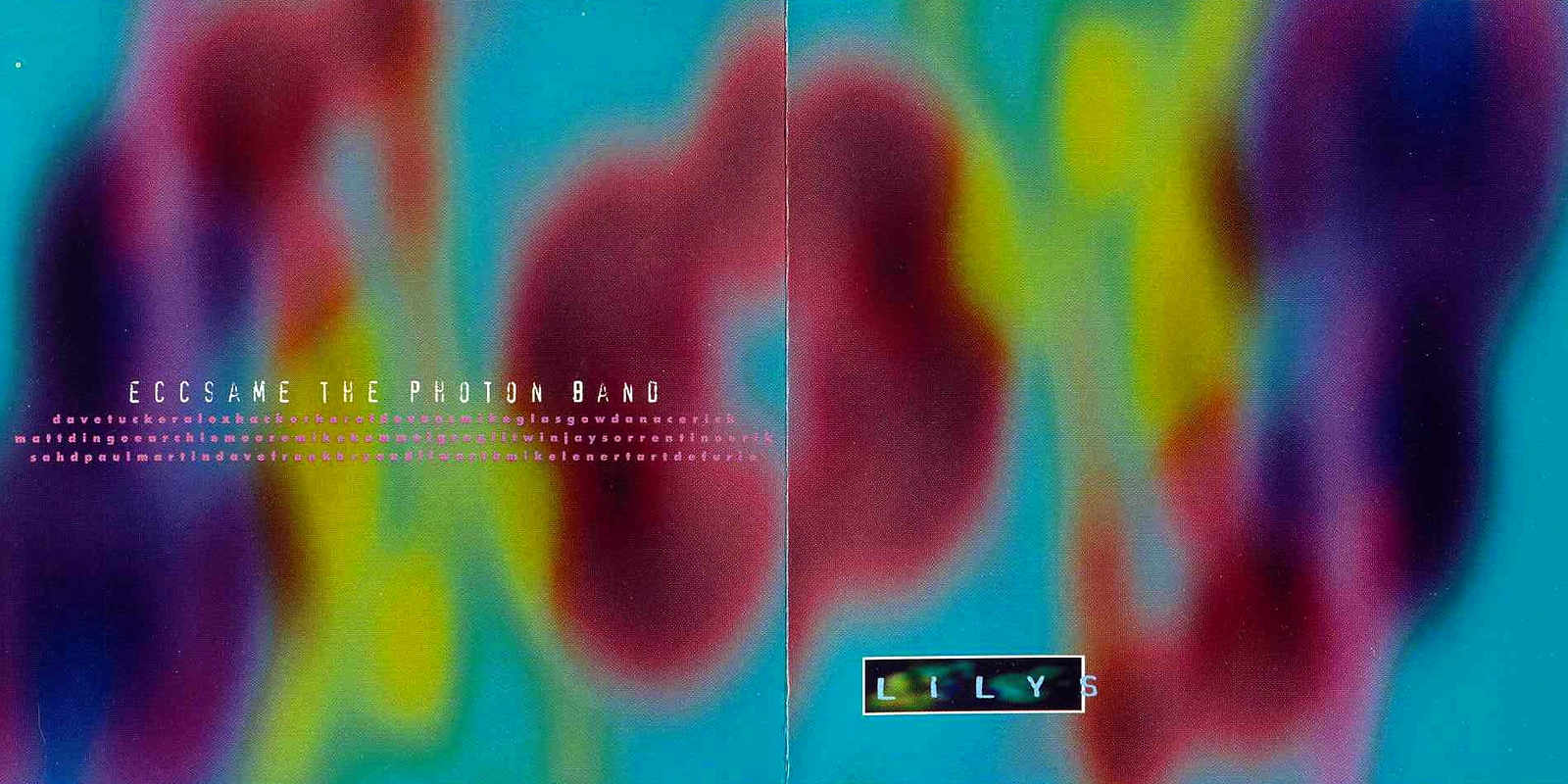
Lilys - Eccsame The Photon Band

|| by EDWARD CHARLTON || [updated] This month marks the 20th anniversary of the release of Lilys' powerful and mysterious Eccsame The Photon Band, a unique collection even among the oeuvre of Kurt Heasley, the band's notably restless songwriter and only constant member. For our money, it is certainly one of the most engaging -- if underheard -- indie rock albums of the '90s. Like a lot of great music, the album's creation owes a debt to that rare and singular cocktail of youth: chance, environment and a positive open-mindedness shared among the four men who created it. "Behold and open to the light," translates the title -- a sentiment that seems to have guided the principals behind it from the foursome's very first minute together.

As we listened to Mr. Heasley, drummer Harry Evans and producer Rich Costey tell the story of the album, we found that Eccsame The Photon Band was a roughly month-long flash of exhaustive inspiration -- a gnawing, melodic, experimental expression that sprang into being so suddenly it felt as if it were over nearly as soon as it had begun. Despite that, the music and production contained therein has continued to resonate with those involved, as well as with a fanatical cult following attracted to its atypical dream-pop charms. Among those, cryptic lyrics, crestfallen textures, occasional moments of loud guitar and a spiritual and devastating silence all continue to stun. To mark the aforementioned anniversary, Clicky Clicky spoke with Mssrs. Heasley, Evans and Costey about the summer of 1994, discussing a wide-range of topics including the philosophies, drum sounds and even the studio weeping that birthed a rare and unique aural document.

"I can't deviate out of the moment -- you get into the game of expectations, then you get into the game of disappointment," Heasley tells Clicky Clicky from his present home in Los Angeles. The sentiment arrives early in our conversation about the album, and it quickly becomes apparent that Eccsame was (and is) something of a mission statement for just that mentality.

The genesis of that notion came two years prior to the creation of Eccsame, spurred by some of the negative reception to Lilys' magnificent and now-legendary 1992 shoegaze debut full-length, In The Presence of Nothing. "I had no idea people would listen to this," he says of that collection, "Much less feel so strongly [about it]. It was ultimately just a group of friends making something in a basement for a few hours. I took it as the most extreme feelings [from some in the scene] of being left out of their own party."

Disappointed, but confident in the power of his on-the-fly approach, Heasley began to see how the band's process might function in the face of more standard and predictable musical norms.

In the wake of the flawless, power-pop injected A Brief History of Amazing Letdowns EP that was released the next year, Heasley made some life changes that would further create the conditions for an experiment like Eccsame. "I had new urban experiences because I had moved from Lancaster [Pennsylvania] into Philadelphia proper, living with some incredible people," he said, "Joey Sweeney let me sleep on his girlfriend's couch for weeks. It was just this ongoing live/work/play space and the amount of literature, cinema and old records that I was being turned on to for the first time was great. There, I had the feeling of going from 22 to 23, and the prevailing wisdom that 23 is the best worst year of your life. Slowly, there were responsibilities creeping in and the realization that 'this is not a dress rehearsal.'"

At the same time, the alternative/grunge zeitgeist of the prior several years was beginning to breed bad vibes. Not only did Kurt Cobain's death in the spring of '94 mark a dramatic shift in the mood of rock culture, but recent records by Talk Talk's Mark Hollis and Pale Saint's Ian Masters alerted Heasley to the loss of fidelity and subtlety in those buzzing times. "Those gated drums in '92," he exclaimed with a sigh. A trip to a Broadway production later that year would also make an impression on him. "Listening to what a five-piece pit orchestra could do literally blew me apart. Working from that level where everyone plays their part and has mastered themselves revealed a new world."

In the winter following the release of A Brief History Of Amazing Letdowns, Heasley began sketching out some fresh ideas. Those recordings would ultimately be released on 2000's Tigerstyle Records split with Aspera Ad Astra. As a historical document, the four songs reveal a remarkably clear vision of the minimal, dreamy sound that would ultimately define Eccsame -- what Stylus Magazine writer Andrew Unterberger described as "Not influenced by shoegazing as a genre, but rather as a principle."

It was time to enter the studio.

That summer, spinART Records agreed to provide five weeks of time at Studio .45, a converted turn-of-the-century Colt firearms factory in Hartford, Connecticut. It was also at that point that Harry Evans of power-pop standouts Poole and producer Rich Costey entered the picture.

Evans had known Heasley for a few years by '94, and had played on every Lilys release beginning with Presence. The two first met due to being physically larger guys in the scene who looked similar and both showed up at the same music store. "I was shopping there and somebody called me (Kurt's nickname) 'Wally' and I was like, 'no, I'm Harry!'" Evan says, laughing, "We happened to be at the store at the same time eventually and recognized each other due to that mix up. We started hanging out and eventually he asked me if I wanted to play drums for him. He played me "February Fourteenth" and I was like 'What the hell! Of course!'"

Following the release of A Brief History and the subsequent shows for that record, Heasley approached him with an idea. "Kurt was like, 'I want to make a record, and I want it to just be you and me.' He booked a lot of time. I hadn't heard any of the material, but he said we could learn it in the studio. Having faith in anything Kurt does, I agreed immediately," Evans reflects. That summer, the two loaded up a van with gear and made the trek to Hartford. There, they met producer Costey and engineer Mike Deming. Costey had been chosen based on work he had done with scene compatriots The Swirlies.

"I was doing a few records for spinART around that time, and at some point I ended up on a phone call with Kurt," Costey remembers, “He was an interesting character on the phone, and I still remember my first phone call with him -- rambling on and on whilst puffing on cigarettes the whole time. We must have connected somewhat. I liked the psychedelic aspect to [Lilys'] music a lot, based only on the album they had out the year before, and given the general monochromatic, conservative landscape of American grunge at that time, Kurt's music struck me as being a total technicolor garden. I had worked with The Swirlies, whom I think he begrudgingly respected, but those two bands were actually quite different in approach. The Swirlies were fighting their own limitations whereas Kurt never saw or felt any limitations at all... [He] was inventing his own landscape."

Setting up on the first day, Heasley and Evans filled out Studio .45's large, single-room with their instruments. Beginning at dusk, the duo at first had a hard time connecting. "On the first day we set everything up, Kurt was going to guide me through the songs," said Evans, "We started recording really late, but it was just not clicking. The first song we were working on was "FBI And Their Toronto Transmitters." Eventually I got super frustrated. While I had told myself initially that I was going to be really sober and work as hard as possible during the session, we ultimately took a break and I got REALLY high. We went back in and nailed it in the first take. I was like, "Aw, this is really disappointing (chuckles)."

"For the first 10 days Costey probably didn't think they were songs!," Heasley added.

After these initial hurdles, the duo settled into a groove, with Evans adapting to Heasley's ideas and advice regarding drumming. "There was a methodical thought to the way that the fills were put together. He really helped me to curb my ego, and I was willing to say 'I will listen to your ideas.' Ultimately, they proved to be great ideas. I had to be open," Evans remembered.

The songs gradually came together over the ensuing weeks, and many of the album's iconic textures began to take focus -- specifically, the massive, roomy drum sound that many Eccsame cultists rave about.

Costey recited the technical details for accomplishing this with aplomb. "The drum sound was a combination of several things: the hard, open space that the live room at Studio .45 presented; a precisely placed AKG 414 placed in between the kick and snare drums, aimed at the floor... heavily compressed with a Spectrasonics 610 compressor; and also the minimal and incredibly powerful, tasteful playing of Harry Evans. Listening to it today, it seems a study in how a drummer should play to the sound presented to him or her, as opposed to the other way around."

Mike Deming is also credited by the other three as being instrumental to the presentation. "I’ve got to credit him for that drum sound. He was a twisted, evil audio genius. He was crazy and so into what he did on a micro level," said Evans, referencing at least obliquely the album's often overwhelming negative space, best heard in the long, faraway intro and subsequent eruption of focus on "The Turtle Which Died Before Knowing."

Other subtle, genius moments were entirely due to chance. On some songs, different takes were mixed together and the resulting edits created things that thrilled everyone in the control room. "A couple of those moments where the vibrato on the guitar shifts patterns -- we couldn't have planned that, but that's the thing! We were open not necessarily to it being correct, but to it being right for what it was," Heasley said.

Other moments betrayed the quieter vibe with sheer power. "The Hermit Crab," "Kodiak (Reprise)" and "Radiotricity" all rock in places, despite being composed mostly with clean, bass string strums. Costey explains that the amping of the guitars went a long way in lending huge power to a quiet source, "One simple thing Kurt was doing with his guitar sounds at the time was to run two different tremolo pedals into two different amps," he said, "It's really simple, of course, but it made for an off-kilter, drunken, gurgling guitar sound that completely shaped the feel of the record."

Elsewhere, such as on the down-tempo lullaby-pop of "Day Of The Monkey," Costey sampled Evans' drums to create a hypnotic loop, later adding room recordings of him playing along to himself to add to the overall sonic fantasia.

The collaborative aspect between the four also played a key role in the shape of the album. "He had done Swirlies records," said Heasley of Costey, "So I was like 'throw me whatever note you think should be in this melody.' I think you can only do so many records where that special and fun ability exists."

As the sessions wrapped up, it was also clear that the process of achieving the album's menthol-cool psychedelia had thoroughly exhausted Heasley. Much of the tracking came down to the wire, and many of his vocal parts had to be recorded at the end in a prolonged series of takes.

"I spent the final 18 hours of tracking in the vocal booth," Heasley recalled, "By the time we were working on "Hubble" I was completely drained by the process, from all these different drives that went into the album. You can hear me crying at one point. I couldn't even stand, I was propped in a chair." Costey, aware of the strain and the reality of the moment, let the tape run. What followed was personal, uncomfortable and brilliant.

It's apparent when Heasley talks about "Hubble" that the song is special to him, referring to it as the closing sequence of the booster of the space shuttle falling to Earth. More importantly, it's a fitting end to the hyper-productive sessions that produced a collection of songs that were not only spacey-sounding, but physically so. Costey took the tapes to Water Studios in Hoboken, New Jersey and Philip Glass' The Looking Glass studio in New York for the rest of the post-production. There, he added many of the synth textures and final mixing details. SpinART had the album out by the end of the year.

And then... it was over.

"Kurt moved to California, I believe, shortly after we made the record," said Evan. "I feel like nobody really got it, understood it or appreciated it when it came out." No shows were played to support the release, which somehow makes the recording all the more mythical.

Within a year, Heasley transformed Lilys into the mod-rock powerhouse that would define the next phase of the group, with songs like "Nanny In Manhattan" (a version of which was recorded during the Eccsame sessions but lost with the master tapes) broadening the exposure of the band and leading to a record deal with Sire. Evans would continue a successful run as the frontman of indie pop savants Poole, an act that also recorded for spinART. Lastly, Costey would use his resume with bands from the East Coast dream-pop and 'gaze scene to begin work in Los Angeles, eventually engineering and producing a seemingly endless list of big-name musical personalities including Sigur Ros, Fiona Apple, Nine Inch Nails, Muse, Foo Fighters and self-professed Swirlies fans Mew, among many others.

Despite the very abrupt end to the Eccsame phase of Lilys, and the scattering of its participants, it is apparent that the three remember the time in the studio fondly, and all have an unshakable faith in the final product.

"I felt pretty good about the album when we had finished it," Costey adds, "It seemed fresh, inventive, and colorful. Kurt's writing isn't miles away from Syd Barrett territory, but as opposed to Syd, Kurt's lyrics were open and personal. I had hoped that it would be recognized a bit more for what I felt was something pretty unique at that time: Psychedelic indie with heavy fuzz, samplers, and 808s -- but it seemed to never really get the attention it deserved. Kurt went straight to The Kinks' Muswell Hillbillies [as the template] for his next album and finally had his talent recognized, but in the process it had always felt to me that Eccsame was just overlooked."

Most importantly though, the sense of trust between the album's principals appears to be the most defining and memorable part of the era. Listening to Evans and Heasley, in particular, speak of their relationship during that time illuminates a connection between kindred souls, a pair determined to create and build as a unit.

"I could never have that kind of naive trust again. You basically get [it] once." Heasley added somberly.

At times during this reflection, it shows that both might harbor some desire to work together again. In the age of '90s dream-pop band reunions, with acts including Slowdive, Medicine, Ride and My Bloody Valentine thrilling audiences once more, it wouldn't be seem that unusual for an influential lineup of Lilys to get back together, hopefully even for new music.

"He knows that I'm willing to work with him anywhere, anytime. At the drop of a hat, I'm in," Evans proclaimed, ever the dedicated bandmate, ignoring the thousands of miles between them.

That possibility is a dream for this blog, at least, and it is dreaming big that brought together those men in 1994 -- hedging their bets on chance and understanding. But big dreams can live on in unusual ways, and funny enough, it is because of the Lilys that this scribe first spoke to this editor at Clicky Clicky some five years ago. And, because of all of that, it has ultimately brought you, dear reader, to what may not yet be the final chapter in the story of a very special and evolving piece of art.

"Behold and open to the light."

Currently, Eccsame The Photon Band is out of print (spinART folded in 2007), and both CD and vinyl copies command steep prices in the collectors' market. Heasley has been negotiating the reissue of In The Presence Of Nothing and two other unspecified titles, and also the release of new music, according to news we reported here in March. Through the murky magic of the Internet, you can listen to selections from Eccsame via the YouTube playlist posted below. -- Edward Charlton


SELECTED PREVIOUS COVERAGE:
In Bloom: Lilys Poised For Massive Resurgence; New Music, Reissues And Live Performances Planned
That Was The Show That Was: Lilys with Prefab Messiahs | Lilypad | 15 June
That Was The Show That Was: Lilys | Lilypad | 25 May
A N D I F O R G O T A L O N G T I M E A G O H O W Y O U F E E L : ten now acts perform selections from the early recordings of Lilys, 1991-1995
20: Lilys | In The Presence Of Nothing
Today's Hotness: Lilys
YouTube Rodeo: Lilys' Amazing "YCJCYAQFTD," "A Nanny In Manhattan," "Baby's A Dealer"
Footage: Lorelei Cover Lilys' "February 14th" | Slumberland 20th Anniversary
Today's Hotness: Lilys
750 Times The Same Song: It's All About The Lilys

December 17, 2013

Clicky Clicky Music Blog's Top Albums Of 2013: Jay Edition

Clicky Clicky Music Blog Top Albums Of 2013 -- Jay Edition

More so than in any of the 13 years in which we've devoted too much time to writing about music, it feels silly to pick the best of it for 2013. So much of what we heard this year was wonderful, and the year certainly exceeded our expectations. This despite our fervently held belief that there is *always*, every year, an abundance of excellent music waiting to be discovered; the trick is finding it. Which is kind of why this blog is here. And while we struggled with tough decisions that excluded deserving acts including Fat History Month, Heyward Howkins, It Hugs Back and Bent Shapes from the final top 10, well, dammit, rules are rules. We're going to have one more year-end list coming by the end of the week, top albums selections from our indefatigable Staff Writer Dillon Riley. Before we let you get to Executive Editor Jay's picks below, we want to take this opportunity to thank you for reading Clicky Clicky Music Blog. We try to do things a bit differently here, by offering more insight and analysis, more background and context. We hope the quality of the product makes reading about music here something you value. And another quick thanks for everyone, both bands and fans, who supported the Lilys comp And I Forgot A Long Time Ago How You Feel, as well as the Community Servings benefit show we presented last month. Music is important; we believe that with every fiber of our being. It matters. Below is a list of the albums that, in Jay's estimation, mattered the most in 2013.
1. Speedy Ortiz -- Major Arcana -- Carpark Records

While success outside the four corners of the record sleeve isn't something our year-end lists take into consideration, it's hard to draw any conclusions other than 2013 was owned by Speedy Ortiz, one of the hardest-working rock bands in the rock music-making business. Within the four corners of the record, it is easy to hear why: Speedy Ortiz makes the sophisticated sort of guitar music we want to listen to a lot. Indeed, Major Arcana, with its full-frontal guitars, churning rhythm section and engaging articulations of frustration and decathection, is immediate and gratifying. To paraphrase a singer from a different band discussed below, there ain't a stinker on it. We reviewed Major Arcana for Vanyaland right here in July; buy it from Carpark Records here.


2. Krill -- Lucky Leaves -- Self-Released

"Just go ahead, climb into my head," is what Lucky Leaves seems to say, leaning down and tipping its comically over-sized cranium toward you, snapping the clamps behind the ears upwards and open, and lifting off the top. "It's kinda weird in here," it goes on, although it is kind of hard to tell whether the record is talking to you or itself when it says that. "Never mind the other dude in there, he's harmless. He's actually got a pretty good band, you should check them out... though he said something about them breaking up? Half the time I don't know what he's on about." We reviewed Lucky Leaves here in June; buy it here (and tick-tock: we're given to understand there are fewer than 40 copies of the first vinyl pressing left for sale).


3. Veronica Falls -- Waiting For Something To Happen -- Slumberland

This was our go-to record for the first half of 2013, and we continue to put it on often. Eminently listenable British guitar pop. The songwriting on the album is so strong that the album feels like a singles compilation. What's more, Waiting For Something To Happen features one of the very best songs of the year, the wistful ode to young love "Teenager." The nagging question of seeing this record at number three on the list is whether that placement, ultimately, can be traced to the enjoyment we got seeing or otherwise interacting with the members of the bands mentioned above. Whatever the reason, the aggregate play counts across ITunes, etc., don't lie. This record is so good even Clicky Clicky Mom liked it when it was played during her visits to HQ; a fairly rare feat, this liking (it was accomplished previously by two admittedly amazing records, Okay Paddy's The Cactus Has A Point -- link -- and Spoon's Ga Ga Ga Ga Ga). Buy Waiting For Something To Happen from Slumberland right here.


4. My Bloody Valentine -- mbv -- Self-Released

We recently discussed mbv with a friend, specifically its surprise release -- and everyone's mad dash to the My Bloody Valentine web site to purchase and listen to this tremendous new collection -- and how that release has been one of the very few communally shared experiences in modern indie rock. That pulse-pounding excitement was totally appropriate, especially given how great mbv is, and the dissonance of that excitement butting up against such a serene-sounding album opener, "She Found Now," perhaps only heightened the experience. My Bloody Valentine's follow-up to its legendary Loveless is terrific, offering not only familiarity (with its cooed vocals and bending guitars), but also an explanation of sorts ("In Another Way" manifests Kevin Shields' purported fixation with jungle, albeit years and years and years after that fixation was a topic of conversation). As gratifying as mbv is, perhaps most gratifying of all is Mr. Shields' uncompromising approach to the business of music; we'd say "outspokenness" if perhaps he spoke more often, although the interviews he's given over the past year are all amazing. Shields' is a singular sonic vision, and hopefully one that will be as inspiring to bands as Loveless has been. This 2013 collection extends and burnishes the deep MBV legacy; buy it here.


5. Los Campesinos! -- No Blues -- Wichita/Turnstyle

Big, bold and beautiful is what this is. While we are still unsettled by the revelation that No Blues was almost not made (the band had apparently considered hanging up its boots), that doesn't in any way diminish how enjoyable it is. Indeed, it's as accomplished a collection as Cardiff-based Los Campesinos! has made. The singles still punch hard, the album cuts are just as rich and soundly conceived. Fronter Gareth Campesinos' lyrics remain sharp and affecting, a feat all the more impressive given his stated practice of writing them as late as possible into the recording process. Let us not overlook just how neat a trick it is that so many of the lyrics center around football, yet still communicate as strongly as when he addresses affairs of the heart (perhaps it is no trick: football -- that's soccer to you, Yank -- is an affair of the heart to Gareth). The single "Avocado, Baby," with is ridiculously catchy chant, just missed our year-end songs list, and other album highlights include "Cemetery Gaits" and "What Death Leaves Behind." We reviewed No Blues here last month; buy it from the band right here. Los Camp play a rare Boston date next month.


6. Radiator Hospital -- Something Wild -- Salinas

Now that we have published our year-end songs list, wherein we disclosed that we favored this collection over even the dynamite releases by scenemates Swearin' and Waxahatchee, it's probably little surprise to find Radiator Hospital sitting here. Call it pop-punk, call it emo, it doesn't matter: Something Wild is fun and emotional and engaging (not that those aforementioned collections from the respective bands of the sisters Crutchfield aren't these things; we just listened to Something Wild more, and math counts). Our own Dillon Riley reviewed the set right here in July; buy it from Salinas records here.


7. Calories -- III -- Self-Released

Here is the third of three self-released records on our year-end list, which, of course, says something about the Music Industry of Today. However, this is not the place for a dissection of the challenges faced by bands trying to sell music. Even so, when something as objectively super and as wildly ambitious as Calories' III isn't the subject of a label bidding war, we start to wonder what the hell is wrong with the world. III is the foursome's most confident and rewarding to date, building up from the stoney foundations of the monolithic post-punk of its early years to embrace looser structures and more varied aural topographies. Somewhere along the way Calories started to sound haunted; at the same time the band started to engage a yen to fluidly jam across larger and larger stretches of time. Now vocals are subdued, guitars are just as likely to be acoustic as electric, but the potency of Calories music is not diluted. The greatest cut from III, the amazing, 10-minute closer "Tropics," is almost an album unto itself. The tune commences with broad distorted chords, crashing symbols and forefronted oohs, shifts into a steady four-four rocker for a minute, and then transforms into a spiraling, poignant final movement that stretches across almost eight minutes. That tune in and of itself is worth about 10 bucks, but you can download III from Bandcamp here in exchange for as much money as you care to pay for it.


8. Ovlov -- am -- Exploding In Sound

The conventional wisdom among the indiescienti is that -- from a label standpoint -- 2013 belonged to Exploding In Sound Records, who issued not only Ovlov's am, but also Fat History Month's blindingly brilliant Bad History Month, and Kal Mark's Life Is Murder, among other fine sound recordings. Ovlov's noisy hooks on am are undenible, despite the aural sludge in which the Connecticut trio encases them on belters like "Nu Punk" and the cataclysmic opener "Grapes." Vintage Dinosaur Jr. is a popularly applied reference, but Ovlov's vibe is less backwoods goth and more conventional (the opener's melody, reinforced by backing vocals from Speedy Ortiz's Sadie Dupuis, echoes great tunes by more pop-leaning Clicky Clicky faves The Wannadies and Projekt A-ko). The music on am shakes and shudders with desperate energy, fuzz flies off the guitars and cymbals, and the whole waxy ball of wax is anchored to punishing snare hits and fronter Steve Hartlett's Mascis-esque yowl. All of which makes the record endlessly listenable. Buy am from Exploding In Sound right here.


9. Guillermo Sexo -- Dark Spring -- Midriff Records

Diving deeper within to explore sounds and textures in the studio, Boston psych-rock unit Guillermo Sexo yet maintain an admirable level of focus, which is brought to bear on the urgent and dreamy material on its fifth long player Dark Spring. The remarkably varied album touts two seven-minute-plus opuses (inluding "Meow Metal," which was recognized in our year-end, best songs list) that speak to the band's confidence and willingness to stretch out and chase ambitious ideas. The set's first third, however, features a slate of immediate and more concise rockers. The collection has a classic '70s feel, adventurous and with an almost narrative quality, making it perhaps the most "albumy" album on this year-end list. We reviewed Dark Spring right here in September; buy it from Midriff right here.


10. Joey Sweeney -- Long Hair -- La Société Expéditionnaire

Long Hair is like an old friend, almost literally: Joey Sweeney's only other solo set, the excellent Heartache Baseball, was released in 1995. That's basically a lifetime ago, during a figurative pause between his most well-known bands Barnabys and The Trouble With Sweeney, the latter of which released its final recording almost a decade ago. This new and fresh solo collection has shed the youthful confusion, dyspeptic romances and coffee nerves that concerned Mr. Sweeney as a younger songwriter. Long Hair, instead, is confident and amused by life, and only a little world-weary. The well-measured, nicely orchestrated set distills decades of Philadelphia's rock and pop into nine songs that feel like a memoir: here is the park where the toughs trashed Sweeney for having new wave hair; there is the bar where the sweetest romantic conquest lifted a heavy heart. The record is highlighted by what might be the most direct piece of songwriting on the set, "Records And Coffee," Sweeney's ode to reliable comforts -- which is what Long Hair turns out to be. Stream selections from the record below, or the entire shebang gratis via this link to Emusic.com. Buy Long Hair here.


December 8, 2013

Review: Heyward Howkins | Be Frank, Furness

While the year in music from Philadelphia will be best remembered for exceptional indie punk from ex-bandmate twins, the close of 2013 -- the release of Swearin's awesome Surfing Strange notwithstanding -- belongs to two remarkable folk-rock recordings from a different set of former bandmates, the scene veterans John Howkins, who performs under the nom de rock Heyward Howkins, and Joey Sweeney. We hope to deal with the latter's album another day, before the calendar turns over again.

It seems a rare occurrence that the contemporary music fan can sit back and remark with satisfaction at the maturity of a favorite artist or band. Gone are the days where artists had the financial support to work a masterpiece into the middle of their seven-album deal with, well, whoever. But the outmoded label system isn't even the problem. If anything, maturation itself -- and the tendency of the process to dim or extinguish that lightning-in-the-bottle, the je ne sais quoi, the piss, sex and fire of young acts -- tends to fuck up bands in the end. Often artfulness seems to fall by the wayside as songwriters inevitably want to take a shot at communicating more directly and plainly. Maybe certain fans want that from their favorite artists; this reviewer wants none of it, as such a desire seems to diminish or discourage lively abstraction, musical derring-do, vitality, the very rock and/or roll itself. There are exceptions to this, thankfully, and it is with great satisfaction we listen again and again to Heyward Howkins' latest offering, the fanciful and finely appointed sophomore collection Be Frank, Furness.

We're not sure which is more surprising, that the sophomore set from Howkins has come so quickly on the heels of his 2012 collection The Hale & Hearty [review], or that it is so very good. Mr. Howkins heretofore was best known to many as a guitarist in notable turn-of-the-century indie pop outfit The Trouble With Sweeney, which was ably fronted by the aforementioned Mr. Sweeney. But from a musical standpoint, Howkins was all-but-invisible after that combo folded in the mid-oughts. The release of The Hale & Hearty, however, seems to have opened a floodgate of creativity, such that Be Frank, Furness, is an even stronger, more vividly realized collection. On top of which, Howkins routinely posts additional music in the form of demos and oddities to his Soundcloud page. Whatever is fueling the onslaught, we'll take it.

Be Frank, Furness is balanced, pristine, and filled with bright, melodic and deftly composed pop. The productions are lush, with elements including horns and piano arranged around, but not ruled, by Howkins' guitar work. Mannered lyrics evoke images of chronologically remote, fantastical places, and highlight both Howkins' facility as a story-teller and his yen for regional history (the album's title is a play on the name of renowned Victorian Philadelphia architect Frank Furness, and Howkins is a man who traces his ancestry straight back to a signer of The Declaration Of Independence). The lyrics scan like memoirs from The Gilded Age: the last verse of the lush strummer "Sweet Tea Oleander" opens with the line "let's take a rumble seat up to Maine, we'll brush our teeth with champagne." Howkins' lilting voice and precise but occasionally curious diction limn the songs with an other-worldly flavor, even as the rootsy foundations of the songs reinforce a traditional vibration. Tunes like "Nogales" and "Praline Country" bounce with such a lightness they feel like they'll levitate despite their adornment with horns, harmonies, hand percussion and tremelo. Nearly every element -- the tastefully treated, always glistening lead guitars, the horns, the melodica -- convey a lyrical quality, supplying counter-melody and texture in ways that present almost as strongly as (but without overwhelming) Mr. Howkins' limber voice.

Howkins co-released Be Frank, Furness with BITBY last month; he plays a full-band release show in Philadelphia Thursday at Johnny Brenda's. Supporting acts include Needle Points, Christina Nietzsches. Be Frank, Furness is available as a digital download and in a very limited edition of 200 LPs, both of which can be acquired via Howkins' Bandcamp, which can be accessed by clicking through the stream of the album embedded below.

Heyward Howkins: Bandcamp | Internerds | Facebook

August 26, 2013

Today's Hotness: The Superman Revenge Squad Band, Joey Sweeney, Heyward Howkins

The Superman Revenge Squad -- A Funny Thing You Said (detail)

>> The brilliant Ben Parker doesn't owe us a damn thing, of course, but jeepers it is hard to keep up with his various enterprises. Our admittedly weak recollection was Croydon, England-based Mr. Parker had lately been working within the band The Jonbarr Hinge [link] and having his plays produced in various theaters. So imagine our surprise to learn that the assumedly moth-balled Superman Revenge Squad project has over the past year been resuscitated once more, expanded, and rebranded The Superman Revenge Squad Band. The act, which features Parker's brother and former Nosferatu D2 bandmate Adam as well as a host of others, will release via Audio Antihero Oct. 14 a new collection titled There Is Nothing More Frightening Than The Passing Of Time. The eight-song set will be on offer in a limited edition of 140 compact discs, and a promotional track has already made its way to the Internerds. The song is "A Funny Thing You Said," and it is something of a Parker classic, as different versions of the tune were released on Superman Revenge Squad's self-titled 2007 EP (which, actually, we can't prove ever existed -- maybe these were just songs we got off MySpace?) and a bootleg, Live At The Green Dragon, released the same year. While those older iterations of the song were spare and raw, the arrangement of the new version practically bursts with melodic ideas thrumming off of tense accordions and wandering saxophones. In one way it sounds like Parker has gone off the deep end finally, but in another it is pure genius. You may recall we've done things like proclaim Parker England's greatest contemporary lyricist, or characterize him here as "startlingly talented," all of which still holds true. You can pre-order There Is Nothing More Frightening Than The Passing Of Time via SRS's Bandcamp wigwam right here. The official release date for the digital single is Sept. 16, but it is a pay-what-you-like download already at Bandcamp, so why delay? While you're listening, read the rest of this blog post, then read this interview we did with Parker five years ago.


>> In the early days of August we dropped knowledge about the forthcoming solo set coming from Philly indie rock lifer Joey Sweeney. To review, Mr. Sweeney's new collection is titled Long Hair and it will be released this fall by Delaware Water Gap, Penn.-based label La Société Expéditionnaire. We now can add to this knowledge base by sharing with you the first full preview track from Long Hair, a nostalgic, piano-punctuated, mid-tempo ballad called "Kate Moss Hologram." The tune -- which we know will be track two of nine, based on this Facebook post -- kicks off with a tossed-off, funny lift from Elton John (you won't miss it), and its rich reverbs and sway-inducing organ evoke memories of long-gone days at the dusty roller rink in the suburbs. But "Kate Moss Hologram" quickly catches up to a relatively more modern remembrance of watching MTV's "120 Minutes" and wanting to get out of town. The latter sentiment is a fairly universal one for kids, and the former for kids of a certain (approaching middle) age. Sentiment and sentimentality -- fortunately always far shy of schmaltz -- have always played a big role in helping Sweeney land emotional punches with his music. Long-time readers will recall our previous reportage indicating Sweeney previously helmed acts including Barnabys, The Joey Sweeney Rock Band, The Trouble With Sweeney and Arctic Splash. There has still been no release date announced for Long Hair, but we imagine that will be coming along soon. While you sit around waiting, stream the excellent "Kate Moss Hologram" early and often via the Soundcloud embed below. We would be remiss if we did not also mention here Sweeney's former The Trouble With Sweeney bandmate Heyward Howkins, who is preparing the release of a beautifully conceived sophomore set of baroque folk rock titled Be Frank, Furness. While a stream of the record was available for a short amount of time earlier this month, presently the only track publicly available is the gentle pop strummer "Nogales," which we highly recommend to your attention. Howkins' solo debut The Hale & Hearty was issued in June 2012 and we reviewed it right here. Stream the new winner "Nogales" via the second embed below.


August 3, 2013

Today's Hotness: Joey Sweeney, White Reaper, Sky Larkin


>> Delaware Water Gap, Penn.-based label La Société Expéditionnaire disclosed late last month it will release new music from Philadelphia indie rock legend Joey Sweeney later this year. The label, home also to Clicky Clicky faves Arc In Round, will issue Mr. Sweeney's Long Hair, a collection that was recorded earlier this year with input from multiple producers; a video trailer for the album -- featuring what we suspect is the collection's title track -- is posted atop this item. There is a very nicely produced live video featuring another new song, "When You Say My Name," that you can watch right here. Over the last 20 years Sweeney fronted such notable concerns as Barnabys, The Trouble With Sweeney, The Joey Sweeney Rock Band and, most recently, the bar band Arctic Splash. A show celebrating Sweeney's two decades in rock was held in Philadelphia last fall, and a career-spanning digital compilation Joey Sweeney Your Life Is Calling was released around the same time. The comp is packed with classic jams aplenty, including "Losers From Rodman Street," "Tiny Ships," "My Name Is Rich" and "The Snitch," as well as some newer acoustic tracks recorded with Kurt Heasley on an island in 2010. While we bemoan the absence of brilliant tracks such as "Gargamel," "The Lever" and "Park Slope" from the set, we recommend you make time for the entire jawn, which you can stream via the Bandcamp embed below. No specific date for the release of Long Hair has been made public yet, nor is there a pre-order presently in place, but we'll certainly bring you that news in due time.


>> You will learn just how well your head is bolted on to your body after just the first 10 seconds of Louisville duo White Reaper's new A-side "Conspirator." Basically, if the head-bolting folks did a good job, you'll still have your head after the verse explodes into your ears. The tune's raucous guitar cacophony and infectious, classic UK-style punk energy charge out of the gates and never let up, an impressive feat as the song approaches four minutes in length. The guitar tracks are distorted to the point of crumbling, the spirited drumming bashes holes through the near white-out onslaught, and fronter Anthony Esposito guides the melody with shouty sloganeering. It's gut-level, immediate rock and roll, tougher and grittier than other popular pairs of the contemporary indie era such as Japandroids or England's Playlounge, but just as appealing to the senses. "Conspirator" is backed by the equally energetic, albeit mildly psychedelic B-side "The Cut;" both tunes were recorded in February at Louisville's Tree House Audio. The single is available Monday via Earthbound Records on black or limited-edition, translucent blue vinyl 7" vinyl (although Earthbound's Facebook indicates the single was available in late May if you knew where to look). White Reaper previously released an EP titled White Aura last October, and it is now available as a name-your-price download at Bandcamp right here. White Reaper is planning to release a forthcoming full-length via Karlsruhe, Germany's Red Lounge Records, but there are no other details about the release available presently. Stream "Conspirator" and "The Cut" via the Bandcamp embed below. And, while we're on the subject, we think you will find this video for "Conspirator" quite enjoyable, as it looks like it was both filmed and edited via a shoulder-mount S-VHS camcorder in 1991.


>> Big news last week out of Sky Larkin's camp, as the Leeds-based indie rock quartet announced it will release later this year a new long-layer titled Motto. Wichita Recordings will do the honors in the UK, and the release date is Sept. 16. The new record, Sky Larkin's third and first since 2010's fantastic Kaleide which we wrote about here, is being promoted with a cracking, but brief new single "Loom," which will be released a week prior to the full length. The title track to "Motto" was unveiled in late spring, and you can still hear the dense and tense rocker right here. Stream "Loom" via the Soundcloud embed below. Pre-orders for Motto -- which was recorded in Seattle with John Goodmanson -- are being taken now; the set is available as a clear vinyl LP in gatefold sleeve with CD, as a CD only, and of course digital download, which includes an as-yet unidentified bonus track. Sky Larkin will tour the UK for two weeks in late September, starting with a London date on the 17th; we advise North Americans to keep their fingers crossed for U.S. dates.

February 7, 2012

YouTube Rodeo: Arctic Splash's "Denim Tuxedo" Live, Loud


Are you seriously gonna go so low? This clip was filmed live at PYT Friday in Philadelphia. We mean, obviously, this is Philly, you should be able to tell just by watching it. If you pour two-thirds of a watery draft beer over yourself while you sit there in the pajamas that you've been wearing for two days running including while you worked, you can probably recreate the real vibe of our wonder years in the city. Arctic Splash, fronted by longtime Philly scenemaker Joey Sweeney as we mentioned last month, is currently working on its first LP. Album teaser you ask? Sure.

January 16, 2012

Today's Hotness: Arctic Splash, Black Swan Runners


>> A world in which Joey Sweeney doesn't have an active band just feels weird. Or at least it feels weird in a different way from a world in which Mr. Sweeney does have an active band. We came up listening to his songs, going to the shows of his various bands (Barnabys, The Joey Sweeney Rock Band, and so forth), and then when he got himself growed up sometime during the last decade it seemed like he had finally put music down after shelving the quasi-eponymous The Trouble With Sweeney. So we were pleased to get a tip a couple months back that Sweeney has quietly bowed another project, Arctic Splash. The Philadelphia-based quintet made its live debut just last summer, and has apparently been at work for quite some time on a debut release, which at least last fall was contemplated as a three-song 12"/download jawn. What's the stuff sound like? It's hard to say: this live clip from the band's first show captures a band at its loosest; the demo "Denim Tuxedo" (someone alert Jon Wurster...) is spare and soulful; and the acoustic demo "Baptised In Vibe" embedded atop this piece is yet more spare, but more reminiscent of Sweeney's later stuff. Long-time readers with superlative memories will recall our occasional rants about Sweeney's unheralded rock period (1994-1996, or thereabouts), and obviously we'd like to see a return to the sweaty, glasses-pushing-up-the-nose Sweeney. Arctic Splash probably won't be that, but we're still quite excited to hear the debut release. Let's get it released, Team Splash, eh?

Denim Tuxedo (Demo) by arcticsplash

>> We're also jazzed for the debut release from Black Swan Runners, a new band from former Retriever and CoCo B's guy Kevin Castillo. We've been a fan of Castillo's music since college, which if you don't know was a long time ago. And we were a bit surprised that CoCo B's didn't have more of a break-out moment with its dazzling rocker "Give Up The Money/1982," from its very solid 2007 self-titled set. Be that as it may, there is new music coming from this new entity Black Swan Runners. Although how different is the new band? The personnel listed at the BSW Facebook page is the same as the personnel in the CoCo B's bio? No matter, we don't really care, so long as the rock is good. And based on some teaser video clips, we think we've got reason to be excited when the band's debut release comes out next month. The as-yet-untitled collection is in the can, after having been mixed by Alex Newport (who we talked about at some length here) and mastered by the seemingly ubiquitous Jeff Lipton. All we know right now is that one jam might be titled "Carolina In A White Coat," and whatever the title is, the tune is awesome. There's a bit more of a synth-and-electronic-beats thing going on in this clip, but the song seems no less affecting. We haven't discerned an official release date yet, but we'll keep you apprised.

October 23, 2011

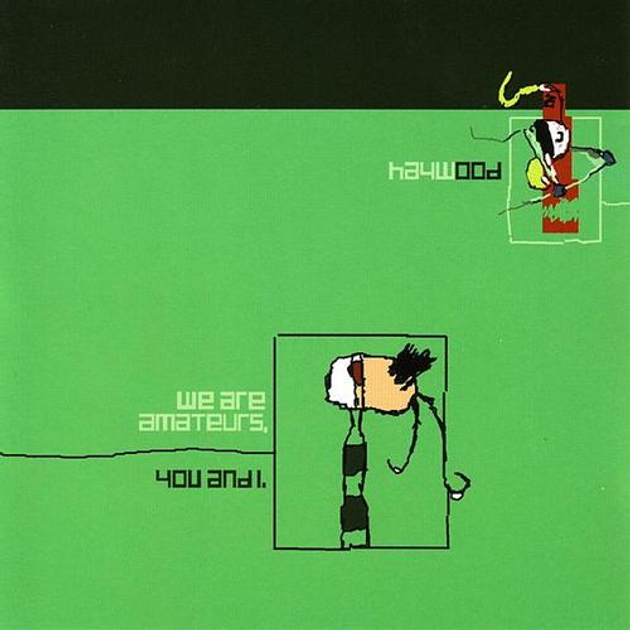
IT'S DARK NOW, AND I'M DRIVING: An Oral History of Haywood's Heartbreaking We Are Amateurs, You And I On The Occasion Of Its 10th Anniversary

Haywood -- We Are Amateurs, You And I
[ALL BAND PHOTOS COURTESY OF JEFF PARETCHAN]

The tale of Haywood's sparkling and formerly final release We Are Amateurs, You And I -- which was issued 10 years ago today, a milestone somewhat overshadowed by some bullshit doo-dad called an "iPod" -- is so enmeshed with the Brooklyn-via-Philly quartet's demise it is hard to pull the two apart. The elements of the story, of course, are not unique (hope, anger, loss, a white knight in tight trousers, resolve, redemption, an A-Team montage where the "plan comes together"), but they don't occur in an order that accommodates a traditional story arc, as you will see. But against numerous if not all Collinsian odds, We Are Amateurs, You And I was issued by Self Starter Foundation Oct. 23, 2001. This piece marks the tin anniversary of that release, and pays homage to Haywood, not the first but perhaps the last great '90s American indie rock band.

If you know me, you know I love the music of Haywood with just about every fiber of my being (indeed, to such an extent we are uncharacteristically drafting this piece in the first person). Some 15 years before I became hopelessly fixated on the mighty Johnny Foreigner (not to mention all the other acts over the years), I was (and continue to be) embarrassingly fanatical about this band from my hometown. Fronter, guitarist and primary songwriter Ted Pauly was raised in a house blocks from my own, and seeing a proto-version of Haywood performing covers of Lemonheads, Camper Van Beethoven and Psychedelic Furs songs at a house show in late '90 or early '91 sold me completely on the configuration of alternately wry and down-in-the-mouth Mr. Pauly up front and truly gifted drummer and raconteur Rob Viola in the back (at the time of this particular show, I think bassist Jeff Paretchan had already gone off to college, and Haywood lead guitarist Ariel Serbin's future role was still being played by dear friend and veteran drinking buddy Luke Abruzzo).

"Rob, Ted, Ariel and I had played together in high school in [the band] Garden Party," Paretchan recounts. "Haywood started in the summer of 1992. I had finished my sophomore year [of college] and everyone else their freshman year. As I recall it was Rob and I who 'founded' Haywood during a conversation driving around the back streets of Radnor in Rob's blue Subaru station wagon. That summer we recorded four songs at American University with Rob Christiansen of Eggs. The sessions were a marathon 24 hours to record and mix. Two of the songs "Nerf Dreams" and "Trash Park" would appear on our first 7" and then later on [the full-length] Model For A Monument."
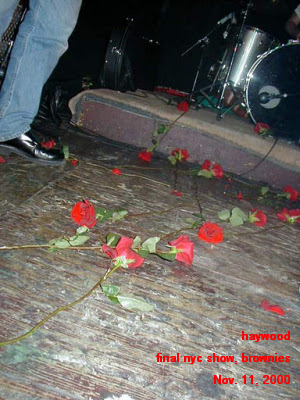
Trying to hit fast-forward from that humble, suburban beginning to the end of the band is difficult, because it's hard to determine when Haywood ends and the rest of our lives begin. Did Haywood stop sighing with the turn-of-the-century departure -- for personal reasons -- of Mr. Serbin? Did the quartet's heart stop beating when Pauly declined a long-hoped-for record-and-tour-support deal? Or when Mssrs. Viola and Paretchan quit the band in the wake of Pauly's decision? Did Haywood go the way of the Dodo when it played its final show in December 2000 at Brownie's in Manhattan? Or did Haywood give up the ghost only after the surprise self-release of its second post-humous set, 2006's As Long As There Is Track, I Will Not Go Back? Is Haywood undead? Actually dead?

We're fairly confident the answer to that last question is yes. But Amateurs for five years had the patina of finality in the minds of fans and band members alike, who assumed Haywood's 2001 break-up signaled the end of the band for good. The record was released by Chris Newmyer's delightful Self Starter Foundation label. That Amateurs garnered critical acclaim from chief Mountain Goat and music journalist John Darnielle [link] and even Pitchfork [link] was exciting to long-time fans, but probably a bit sad and frustrating for Haywood. That's because, although from the outside the band appeared to be just at the cusp, or, as Darnielle put it here, "like a magnolia just about to bloom," in fact the band had agreed to call it quits well before the album was even recorded. When the break-up was finally made public, it seemed like a capitulation to the powerfully poignant sense of loss and resignation that drove Haywood's best songs.

"We did keep [the break-up] a bit of a secret," at least from folks who had no need to know, confesses Mr. Newmyer, who we caught by phone in between his scheduled stints managing the current Ra Ra Riot tour. Newmyer is quick to point out that the hush wasn't from any inflated sense of importance of the news, but rather because the band wanted, if possible, to keep album reviews focused on the music.
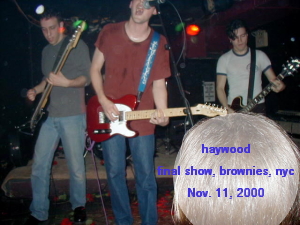
"It's an excellent work of catchy indie-pop, reminiscent of Built to Spill, with a profoundly personal and sentimental side," observed Pitchfork's Brad Haywood. Really, that was his name.

"What terrible timing," summed up critic Eric Herboth in his review of the record for Lost At Sea.

Over the course of its career, Haywood found incredibly stirring ways to synthesize the desperate power of Midwestern, second-wave emo and the grace of the most genteel indie pop. But as Pitchfork's scribe astutely recognized, Haywood's greatest strength was not necessarily in writing and performing the songs, but in conveying the emotions driving them. I've listened to the song "Plow" from Amateurs about 400 times in the last two years; I still find the lyric "I was hoping I'd catch you out of luck" devastating. Pauly's voice breaking at the end of the line "your words get caught in your throat" from his ode to Viola "Tough Hero" on paper seems calculated, but the recording is terrifically affecting. The tragic finality of "Paper Shirt," the album's denouement, is like a sublime slap across the face. And "Come On Tell The Truth," we could go on and on about how it almost hurts to hear it. The record's not all sad stuff, though: album openers "The Last Days of Baronov" and "Button Up, Buttercup" both soar with exuberance, and "Don't Go Breaking (My Heart)" earns the band all of the Superchunk comparisons. All of We Are Amateurs, You And I is embedded at the foot of this piece; you can stream or download all of the tracks.

When I saw the 10th anniversary of the release approaching, I got in touch with Pauly, Viola, Paretchan, late-period lead guitarist Danny Barria (formerly of Philadelphia's Clock Strikes 13, now of deservedly hyped The Big Sleep, which is about to release its long-awaited sophomore set Nature Experiments on French Kiss Jan. 31), producer Adam "Red" Lasus and Newmyer to see if anyone was willing to talk about the record. Happily, everyone was eager to take some time to think about how the record was made and what it meant in the scheme of Haywood things.

"The record holds up to any indie rock coming out now and is more fully realized than a lot of current indie action," says Mr. Lasus, who -- in addition to recording much of the Haywood catalogue -- also recorded classic indie rock albums including the self-titled Clap Your Hands Say Yeah record, Versus' peerless The Stars Are Insane, Helium's The Dirt Of Luck and Lilys' towering A Brief History Of Amazing Letdowns. "In many ways [Amateurs] was the last real indie rock record I made."

Newmyer is similarly effusive. "I got to put out a bunch of good records, but to this day the second Haywood record [released on Self Starter Foundation] is not only one of my favorite Self Starter records, but one of my own favorite records."

Had the band committed to significant touring to support Amateurs, the recording sessions would have been paid for and the album released by a label, although somewhat comically the band members aren't quite certain which one; it may have been Southern Records. Instead, faced with the departure of founding lead guitarist Serbin and dogged by concerns about the practicality of pursuing the rock and roll dream, Haywood disbanded.
"I think it was somewhere around December of 1999 that we had played a couple of shows in New Jersey with Ariel," Paretchan says, "after which he decided to quit the band. Rob, Ted and I met at [the restaurant] Veselka to talk about the deal we were being offered. I don't remember which label [it was], but I thought it was someone other than Southern. It was a cold rainy night -- maybe in February of 2000? Ted expressed a lot of hesitation."

"I remember [Ariel's departure] making me even less hopeful for the future," Pauly concurs.

"I do remember that Ariel quitting the band was a big issue," Paretchan agrees. "We had the offer of money for recording and tour support, but we would have to do real touring. Ted wanted to do other things -- settle down, [and] focus on his work."

"Somehow I felt like it was time for me to do grown-up things, whatever I thought those were at the time," recalls Pauly. "My rationalization was that I thought even Superchunk must've been having a hard time making a living, in Chapel Hill, where the cost of living was probably silly cheap, right? Of course I never called them, so how could I have known? I didn't know Superchunk."

"Yes, we broke up in Veselka," Viola agrees, "...great borscht."

"Rob and I were pretty surprised/disappointed, angry," Paretchan continues. "We had been playing together for a long time and finally were getting a good break after lots of work, and Ted wasn't interested. Rob and I went across the street after we finished at Veselka to some dive bar, ordered some drinks and basically decided to quit Haywood and start another band."

But then something very interesting happened: after being unwilling or unable to accept the record deal, the remaining members of Haywood decided to make a new record anyway. And, ironically, the guys attribute the quality of the performances and recording sessions at least in part to the fact that there was nothing on the line.

"We decided to record album anyway because we all loved the music," according to Viola. "I remember feeling that we could do whatever we wanted when we made this album. The band was a bust and we had nothing to prove."

"There was a total sense of freedom," Paretchan emphasizes. "Nothing to prove, and we could really do whatever we liked, without having to think about what people would think."
The mix of emotions regarding the band's break-up colored the recording sessions, Paretchan suggests. "There may have been some 'anger' about the ending of the band that translated into the rock numbers 'Baronov,' 'Buttercup,' 'Moscow,' [and] 'Don't Go.'"

Of course, at the moment, Haywood had no lead guitarist. This hurdle was soon overcome, however. Mr. Barria -- like the members of Haywood -- had migrated to New York from Philadelphia with hopes of a career in music taking off. He had crossed paths with the Haywood guys while everyone still resided in the City of Brotherly Love, and that early connection proved crucial.

"[W]e found Danny, who tamed his huge guitar enough to sit in the mix, and wrote his own parts for [the songs]," Pauly remembers. "He was a goddamn gift and is largely responsible for the existence of the record and any optimistic notes on [Amateurs]."

"My Haywood memories are always going to start from the fan perspective, because I loved them," says Barria. "Still have my Great Cats Give Chase tape [an early self-release. -- Ed.] somewhere. I saw them [play] at Upstairs At Nick's in '97 (may have been a show with Zumpano), and my very first impression of them, before they'd even played, wasn't a good one. They all wore suits that night (which I subsequently learned isn't really the Haywood way) and seemed a little nerdy to me. I saw Rob making out with a girl and I remember saying to myself 'Alright, Romeo, take it easy.' Anyway, I was [too] quick to judge because once they started playing I also said to myself, "these are really good songs, and dude is an amazing drummer.' I got the Great Cats tape that night, and that was that, hooked."

"I know Ted and I had a bit of an email correspondence going on," Barria continues, "and I remember exactly where I was sitting, sometime around February of '00, when he sent me a message asking if I knew any guitarists because they had just lost theirs. I jumped on it because starting/joining a band was the only reason I'd moved to New York. The deal was that Ariel had just quit but they had written an album's worth of material and they wanted to play some shows and record before calling it a day. Ted was planning to get married and Rob and Jeff were going to continue playing, but [the demise of Haywood] was definitely a done deal going into it, that they'd decided not to continue after the next record. That was kind of sad and weird, but I was just really happy to be playing their songs with them."

"Danny was very important in the different sound of this record," Paretchan offers. "Big hooky guitar parts. [At a] critical moment, when we lost one of our founding members, Danny really stepped in and made a big difference. Ariel and Danny are different types of players. At the time I think that Haywood needed a confidence boost -- and Danny's playing gave it to us. I didn't really realize how great it was to have Danny around until we finished the mixes and I thought 'Wow, this record sounds huge!'"

Barria found his entrée into the band to be a little disconcerting. "I remember taking my Gibson 335 and my Peavey Bandit 65 and my pedals on the subway from the East Village to Rob's (and Ariel's?) place on Grand and Marcy. I had no idea where I was going, and it sucked carrying all that, and I got there and they had a fucking Peavey Bandit 65 in the basement. And then after being nervous about trying out, Ted mentioned he didn't really like my Gibson."

"I remember Ted suggesting Danny to step in as lead guitar for a few remaining shows and to record Amateurs," says Paretchan. "The first practice was at Rob's place in Brooklyn. Danny came in with the Peavey Bandit, a black strat copy and some sort of rackmount echo/delay thingy. My first impression was 'Whoa what is up with all this space guitar stuff?'"

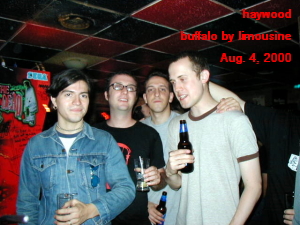
"Anyway," Barria goes on, "my first show with them was at the Continental and I fucked up the first note of the first song I played with them. We played more shows throughout the year and went on a little tour, too, I think Wesleyan and two other spots. My favorite moment was breaking down in Herkimer, NY, on the way to a show in Buffalo and Rob somehow lining up a white limousine to take us the rest of the way."

Haywood then turned its attention to recording its swan song. After a disappointing recording session with Kramer in New York in 1994, Haywood placed a lot of importance on working with a producer it trusted; Lasus had helmed early recordings as well as the sessions for Haywood's brilliant second full-length, 1999's Men Called Him Mister, and choosing him again to record Amateurs was a slam-dunk decision.
"We recorded for the first time with Adam [in 1993]," Paretchan recalls. "We did five songs together [which ended up circulating on a tape fans called Red's House Sessions and included an alternate take of "Nothing Happens" with Barnabys' Joey Sweeney doing backing vocals; the music was eventually compiled onto Model For A Monument]. So the connection with Adam goes back a long time before we ever did Amateurs."

"We had a super comfortable and fun studio dynamic [recording the record]," adds Lasus. "The ideas and concepts were falling into place without really having to talk about them. The sounds were big, but not too big, and the songs were really all brought to their peak."

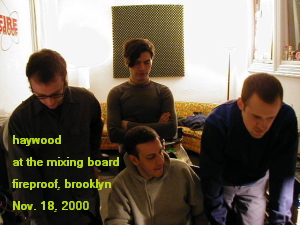
"Red was a huge part of this album," Paretchan states, "and so was recording at Fireproof [then in Brooklyn, now based in Los Angeles -- Ed.]. Working with Red was so easy, he always understood what we were looking for, we were familiar with the space and the equipment. I remember recording to tape and all of us at the board for mixing which was a big part of the fun."

"There were two nerve-wracking moments for me," Barria remembers, "when the parts I'd come up with didn't work for whatever reason (we hadn't played some of the songs live a lot, think I was just working off of demos on those, might be wrong about that), the intro on 'Tough Hero' and the mid-section on 'Paper Shirt,'and I had to rethink and come up with something else on the spot, which is weird to think about when I hear the songs now, they just seem like the songs they've always been, kind of assured, which I think is more of a testament to how good [Haywood's] songwriting had gotten than anything else."

"Incidentally," Pauly says, "all the songs [for Amateurs] were all written in the Ariel-era, 'Paper Shirt' being the last, written in the last, waning daylight of the last days of Ariel."

"My favorite part of the whole recording, though, was the very last bit of tracking, the end of 'Paper Shirt,'" Barria recalls. "Rob kept telling me to lay down some kind of 'sweet lead' or whatever, and it just wasn't happening, we tried for a while. So Ted said 'Well, let me try,' he sat down with the guitar, and it was the perfect moment, for the song and just as a recording experience, as a witness. It was one take, and it was perfect, it's what's on the album. And it seemed really appropriate that the last guitar part on the last song was recorded by Ted, and the last bit of the song as it winds down is just the four of us keeping it quiet."

"I had forgotten about Ted's solo at the end, but Danny totally has it right." Paretchan agrees. "That's exactly what happened."

Is it the band's greatest album? Sure, what the hell. There are various arguments against the primacy of Haywood's other releases, anyway, although they are fine releases all. The band's full-length debut, Model For A Monument, was actually a comp of a bunch of early material that some fans had had for months if not years. Men Called Him Mister, released in 1999, was the last record to include the founding quartet and it was released once the band had immigrated from Philly to Brooklyn. But while the record is amazing on a lot of levels, it could have been a bit more succinct; a couple songs could have been relegated to b-sides, and the criminally omitted "Empty Car" and "Alpenland" should have been included, in my opinion. Haywood's doubly post-humous surprise 2006 collection As Long As There Is Track, I Will Not Go Back is blindingly brilliant and shockingly ignored, but as it was a studio project only and came so long after the band's original dissolution, it doesn't feel like a perfect fit for top dog status, either.

The rhythm section, anyway, certainly believes Amateurs captures the band at its peak.

"This LP captures the band at the heights of [its] tightness and instrumental powers," Viola agrees. "One could argue that Men Called Him Mister had better hooks [and] writing, but the the playing on Amateurs is confident and massive."

"I agree that Amateurs is more confident and epic," add Paretchan. "Although Amateurs couldn't have happened without Men Called Him Mister, which was where we cut our teeth on various production techniques and sounds which would later show up on Amateurs. We were already familiar with Adam's guitars, amps, pedals, etc. and how Adam worked. This all helped on Amateurs."

"All the Haywood sessions were super important to me," says Lasus, "but this one was one of those 'Wow, this is a great album from top to bottom.'"

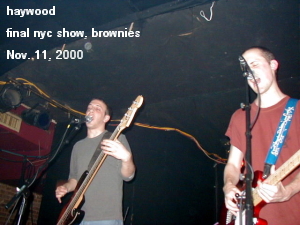
"The recording of this record is very much tied for me to the final NYC show at Brownies," Paretchan says. "Both were bittersweet -- pinnacles of recording or live performance, and both signified the end of the band in very real ways. I know that the day after the final NYC show at Brownies, I woke up and listened to Born To Run start to finish sitting in my room. I found out later that Rob had done exactly the same thing."

Viola sums up my feelings, exactly, every time we put on one of Haywood's records: "Fuck, man, I miss this band!"

"We had no idea at the time that we would later record As Long as There is Track... so it was a sad time," Paretchan remembers. "Especially given the strength of the album and the response in the press. There was a sense that we had really hit our stride and were about to get somewhere after so many years of effort. Dashed hopes... Even to this day, nothing has ever been as much fun as writing songs, playing shows and recording with Haywood, because it was always about a group of friends making music that they liked together. Even though Rob and I were pretty pissed about having to bail on the record label offer -- we just couldn't help ourselves from wanting to record those songs. Which is probably why we joined up together to work on As Long As There Is Track, even though we had no future as a band anymore. Just can't resist those songs!"

THE SONGS, IN THE BAND'S OWN WORDS

LAST DAYS OF BARONOV
Pauly: "This song is about my brother and my grandfather's dead Saint Bernard."

BUTTON UP, BUTTERCUP
Pauly: "I felt like there was a lot of sad, impressionistic emo coming out, and I just wanted everyone to look on the bright side."

SIX STARS
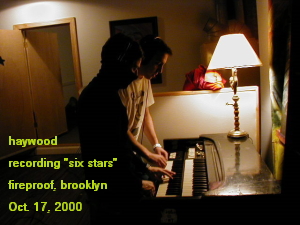
Pauly: "I wrote a sad, impressionistic emo song about the lack of stars with all the damn city light pollution. This was a slow dance about my then-future wife. I tried to play it at Rob and Emily's wedding years later, but I always struggled through the solo beginning with the full band; why should it be any different on my own." Paretchan: "Danny and I played the a "four hand" organ part on 'Six Stars' together on a Hammond C-3 in the studio. The falseto vocals... were a tip of the hat to Ariel's vocals on 'Keystone Rag' from Men Called Him Mister."

TOUGH HERO
Pauly: "This song viscerally recalls the feel of an early-'90s night at Fergie's Pub [in Philly] with Rob. Drinking with Rob in Philly in the '90s remains unrivalled for overall end-of-night satisfaction. I also remember that the flangey guitar sound on this one made me feel, every time we played this live, like I was playing "Just the Way You Are" by Billy Joel.

PLOW
Pauly: "This was about my friend Brian [McGrath], who was in Wendyfix, and then co-wrote a song on our second record ("Little Black Dress Club") and then went to Maine and then played in Mantissa and then once we walked around Ground Zero and then he disappeared." Paretchan: "Keyboard parts were usually something we saved for the studio, as we could never do them live. This meant that most of the parts got written/worked out in the studio. I think Rob played the keyboard flute sound on 'Plow' -- this was also our first tune to use drum machine, no? Using a Roland MC 303. And I played the keyboards on the bridge. I remember playing the keyboard part on 'Plow' while Rob was turning the dials on the Korg Toneworks delay pedal."

HOTEL BAR IN MOSCOW
Pauly: "I have never been to Moscow. I think this one was tangentially about breaking up with someone. I liked to steal '80s lyrics for my songs. Here, Aretha Franklin's "Freeway Of Love," except we get off it in a pink hatchback with no one driving. Somehow I thought that was a metaphor for my love life at one time."

COME ON TELL THE TRUTH
Pauly: "I think-- think-- this one had been kicking around for a long time. I feel like I remember playing this fairly early, at a show with Pee Shy? and The Joey Sweeney at Under Acme." Paretchan: "the lyrics 'I wanna be just like my dad / and marry the first real thing I ever had / Everyones busy slipping it into conversation / and I'm patient / but not that patient' always struck me as a painfully personal and honest lyrics. I played the Roland MC303 through a MicroSynth pedal that Rob was messing around with to get the sound -- this part was written in the studio, and really filled in a lot of what I thought was missing with my bass part on this song."

DON'T GO BREAKING MY HEART
Pauly: "I just hoped to get a little of the shine from Elton John and Kiki Dee on this one. This felt like our most Rainer Maria song. It was up at the top of my range and felt my most emotive, and I loved to play it and it was also, (duh) about breaking up, very clearly about my college girlfriend. It also features our dubbiest bridge." Paretchan: "Recording 'Don't Go Breaking My Heart' was challenging; it was hard to capture the energy and volume of the live performance in the studio."

PAPER SHIRT
Pauly: "I think Ariel gave me paper pajamas from a trip somewhere, or maybe just to Pearl River. This was about being 90 and deciding to go outside for the first time in a long time, and deciding to dress up in my finest paper shirt, which of course would be a bad idea in the rain." Paretchan: "'Paper Shirt' was an after-thought in a way. One of the reasons I think the record sounds better than Men Called Him Mister was simply that we had fewer songs to record. If I'm not mistaken, one of the other issues the band was facing was not only having to decline the offer for recording and tour support - but also that Ted seemed to be having writers block and we weren't able to put together any more songs. 'Paper Shirt' got on because we needed an album's worth of material. I recall doubts about the strength of the tune. Somehow it is a nice post script to the album in the way that it gently disappears at the end."
Haywood - We Are Amateurs, You And I. (2001 album release) by statikluft

June 8, 2008

Muxtape No. 9: Tired Of All The Largesse

Tired Of All The Largesse
Welcome to the weekly Muxtape. More auditory spelunking into the '90s, and into things that sound like they came from the '90s. You can stream all the tracks at this link, and we've jotted some thoughts about each track below, as is our wont.
1. Coco B's -- "Give Up The Money/1982" -- RCRDLBL download
(After learning of the whole Retriever/Coco B's connection last week we dove into the latter band's stuff and have been enjoying it. After our third or fourth run through this track it finally occurred to us why we dug it so much. Put simply, Coco B's 2008 = Haywood 1994. Even one of the Haywood guys think so. This one is a rocker with lots of guitars; it even has a slight hint of something Walter Schreifels-ish in the vocal.)

2. Versus -- "Glitter Of Love" -- Secret Swingers
(A song filled with many guitar lines we stole at one point or another. After re-ripping our Versus records it was hard to pick which track to include. We thought pulling something off The Stars Are Insane would be a little obvious, so here is a superlative mid-period track from the band's 1996 set. Tons of interlaced guitars and gratuitous movie star references. This one has a big lyrical payoff at the end when Richard Baluyut shouts "we can try to pretend that we're still in love.")

3. Clown Down -- "Living Alone" -- Living Alone
(Before the guys in Clap Your Hands Say Yeah!! who are not Alec Ounsworth were in The Clap, they lived in Boston and had a band called Clown Down. We never saw them live but a friend of ours who is a friend of theirs gave us a CD-R of what were purported to be the band's demos. Turns out the demos were this record, the title track of which you can hear here is one hot bummer. Some nice "oohs" in here; it's surprisingly hard to get those right.)

4. Bedhead -- "Bedside Table" -- What Fun Life Was
(Two band names in a row with an internal rhyme scheme. We also recently re-ripped all of our Bedhead and have had a nice time rediscovering certain tracks. This one is amazingly peaceful at first with its smiling little ride cymbal-enabled trudge around the corners of your mind. Of course, the track has a tumultuous ending, but you didn't just think they were going to stand around with all of those Telecasters and not rock out eventually, did you?)

5. Joey Sweeney -- "Largesse" -- Heartache Baseball
(More ride cymbal in here, that must be why we sequenced things this way. We almost went with "My Name Is Rich," which we think about when we're waiting at a bar alone, or "Fixing Coffee," which we think about when, well, that one's kind of obvious. But this quiet number has a nice feeling of resignation to it, and it seems to go nicely with a morning in the middle of a heat wave. We really like the talking in the background toward the end that stretches the space. One of Sweeney's best lines is in here, namely "Why do you want a disease when you know we could get by on a cold?")

6. Sebadoh -- "Happily Divided (Demo)" -- Bubble And Scrape [Expanded Reissue]
(This has always been our favorite Sebadoh jam. The new expanded reissue of Bubble And Scrape is almost out in the U.S. and it is chock full of interesting extras, but perhaps the best is this demo. Although the demo of "Soul And Fire" is nice as well. We had high hopes for Bakesale after hearing "Skull" on the Hotel Massachusetts compilation, but that record never was able to eclipse our affection for Bubble And Scrape.)

7. Come -- "Shoot Me First" -- Near Life Experience
(Relatively rare instance of journeyman musician Chris Brokaw taking the lead vocal on a Come track, which is understandable: Brokaw's voice is adequate, but Zedek's has always been singularly emotive and powerful. And maybe that's why Mr. Brokaw has so many great lines in this song, as at the time he may have had fewer outlets for them. "When you laugh I can see everything I think you used to see in me.")

8. The Sea And Cake -- "The Sporting Life" -- The Fawn
(Bit of a hard contrast here. This track is as light as "Shoot Me First" is dark. It's sort of got the "Thriller" bass line going. In our opinion this song epitomizes the best of the more electronic efforts from the veteran Chicago foursome. The song has especially strong impact in the context of all of the amazing guitar-based tracks on the band's prior set The Biz, a copy of which should exist in every household in America.)

9. Tricky -- "The Lovecats" -- Vulnerable
(A nice cover and an attempt at an appropriate segue to the Willie Williams jam.)

10. Willie Williams -- "Armagideon Time" -- Version Dread Dub Specialist
(The original version of the track made more popular -- at least to us -- by The Clash.)

11. The Remote Viewer -- "It's So Funny How We Don't Talk Anymore" -- Let Your Heart Draw A Line
(Nice emo electronic jam. We should buy this record; can't recall where this MP3 came from.)

12. Seam -- "Autopilot" -- The Problem With Me
(Very purposeful and well-crafted devlopment in this track. Persistent layering. Hypnotic. The soundtrack to the blizzard of 1995.)