
>> We love encountering evidence of the universality of indie pop, identifying acts from around the world mining the sounds of Anglophilic '80s guitar pop. That the "cause" side of the equation has traveled far and wide perhaps shouldn't be surprising any longer in our Internet-connected age, but the "effects" thrill us nonetheless. The very location of a band can seep into its interpretation of the form, and in sometimes subtle and effervescent ways complement the timeless aspects of the little genre-that-could. Be it in sound, language, spirit or even general enthusiasm, when it is good it is icing on the cake. Which is why recent digital singles from young Ukrainians Night Dew Call have caught our collective ear. Straight outta Pobho, the dreamy and twee four-piece craft dancey, clean and crisp singalongs for late night bar crawls amidst the open-collared breeze, as in its tune "Someday." "You'll see me around someday" promises a pleasant mid-range singer (in perfect English, we suppose it is worth adding for our lyrically fixated readers). The bending "ohs" and the earworm guitar line that opens the tune recall touchstone acts like The Smiths to some degree, but the brisk pacing and relaxed but confident guitar solos suggest that this band needs no help understanding how to execute an effective entrance into a three-and-a-half minute sleeper anthem. And so bring on the Globalism, we say. Download "Someday" for any price right here; that number as well as two other digital singles from this year, "Citizen" and "Schedryk," can be streamed via the embed below. -- Edward Charlton, At Large
>> We were quite entranced by Melbourne, Australia-based electro-acoustic sound manipulator extraordinaire Katie Dey's 2015 full-length debut, asdfasdf, taking note of her stunning and original twists of melody and sound. The songs were fairly singular, offering modernist, post-pop tones and pitch-shifted vocals that sounded painstakingly crafted. Just about a year later we now have the first fruits from Ms. Dey's follow up, flood network. Due Aug. 12 via Texas-based Joy Void Recordings, the album is heralded by a brace of preview tracks: "Fear o The Light" and "Only to Trip and Fall Down Again." The tunes indicate a slightly more rockist approach when compared against last year's model, with steady drums grounding impressive and unique EQ artistry and fuzz. Still, dubbing the tunes conventional, however, stretches the definition of that word toward the breaking point. "Fear o The Light" -- seemingly a counterpoint to asdfasdf's "Fear o The Dark" -- marries white-noise beauty to a steady, acoustic guitar-led folk-rock structure before Ms. Dey sets to work shifting her lovely vocals into hyper oblivion. The tune "Only to Trip and Fall Down Again" aspires toward blooping electronica that pleasingly echoes Clicky Clicky-faves The Books at times (that's an extreme compliment from this publication, don't you know), although the rhythm tracks' organic feel is more exotica than futuristic. This reviewer is expecting the majority of music press to adore Dey's inventive release: if only the overground was routinely this exciting. Joy Void is releasing the set on Pink/Blue/Yellow/Clear, Blue/Pink or Blue/Yellow splatter vinyl, color combinations that perhaps come close to approximating the amazing and original talent cut into the grooves. Pre-order flood network right here. -- Edward Charlton, At Large
>> This writer was absolutely in love with TV Wonder's Bird Sounds EP, which was released last year by the routinely excellent Faux Discx. The short set was a highlight of a pretty cracking year, and the Dutch quartet appear to have made the most of it, garnering slots performing with American indie heavy-hitters such as Viet Cong (now Preoccupations), dream-pop delighters DIIV and the mighty Detroit four Protomartyr. On top of this, the band has recorded two new songs for a cassette Geertruida Records issued late last month. "Glazed" and "Fixed Aesthetic" continue in the vein of the Sonic Youth-inspired jams of the aforementioned EP, but incorporate a pinch of additional clarity and studio punch. "Glazed" opens with a surprisingly major-key garage shuffle before introducing the more dissonant guitar interplay characteristic of the band's music. At the eighty-second mark, the band reacquaints listeners with its post-punk gloom and tension, and it is a delight to hear once more. From there TV Wonder locks into a groove so sinister that when the song's care-free opening chords return, they're run over flat by detuned anti-solos that capture the youthful anxiety and explosiveness this band expresses so well. It's just a great steamroller of a song that makes the most of its few, simpler parts. "Fixed Aesthetic" sticks more to the gloom side of the TV Wonder coin, but, again, the combo switches gears midway to a new part that captures a dreaminess and dread reminiscent of the late, great Women, while also still having its own stark and minimalist European voice. TV Wonder are on a roll, let us all pray they don't stop. Boston fans familiar with the shoe-brand cross-marketing phenomenon Converse Rubber Tracks will be interested to know TV Wonder recorded these two tunes in a single day as part of Converse Rubber Tracks Amsterdam. Order "Glazed" / "Fixed Aesthetic" on cassette right here, or click through the embed below to acquire the digital files. -- Edward Charlton, At Large


 Opener
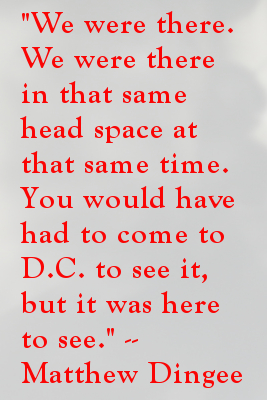
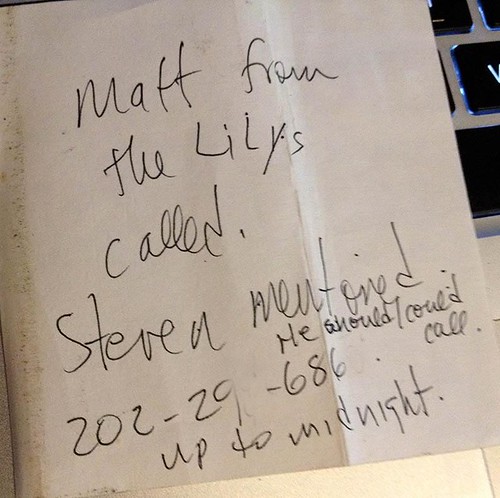 Matthew Dingee (guitarist/vocalist): I guess I shouldn't be shocked that Davis has this note. He and Stephen are excellent documentarians. I will say I was definitely formerly of
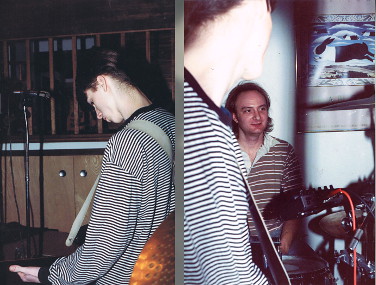 Lorelei as a three-piece didn't start off too far afield from Lilys, though much less refined. We played with bands on other local labels and enjoyed that. But fitting in was the last thing I wanted to do. To Mike's credit, he didn't seem to worry too much about whether the roster fit together. He put out records by the bands he liked. He just happens to have inscrutable taste and so it all fits together in the end. For example, despite the fact that we sound nothing like Small Factory, I'd go completely mental when they played. They were so good and played with such enthusiasm. I wanted to do that.
 CC: How would you describe the progression that the group saw between the "Bitter Air" 7", "Mimesis" from the ...One Last Kiss comp, the Asleep EP and then the full-length?
 CC: What was it like recording with Geoff?
 DW: After [our] sobering tour of England for Asleep -- documented in Robert Salsbury's [tour film]
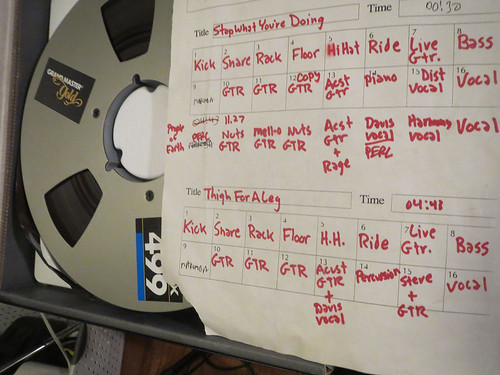
 Overdubs were done over the next two weeks. The heavily-layered guitars were tri-amped through a Danelectro 3x10 combo, Acoustic 4x12, and Fender Bassman, live-mixed to one track. Looking at the tracking sheet, we had 4-7 tracks reserved for guitar out of the 16 available tracks on the ADATs. The unusual instruments [borrowed] from the Woodlawn [school] instrument room for this session included a double bass, some tuned woodblocks, conga drum and the Gardner family piano. Through a fortunate error, a cheesy orchestral percussion track on "Crimelab" did not get transferred to the 24-track mixing tape at Avalon.
 Matt would go out into the studio, actually I believe we sent him into the tiny studio restroom, to record these crazy emo-fueled shrieking freakouts, like cathartic vocal outbursts. These were overdubs and were mixed in low during the parts of the songs when the guitars detonated your speakers. I can't remember which songs had these screaming tracks, but on re-listening I'm imagining that I'm hearing them on every song all over the album, which is cool.
 DW: Geoff and the band would ponder each of the 16 instrument tracks with a "what can we do to this" attitude. Sometimes, one simple change, such as "Crimelab's" distorted conga drum that Geoff came up with, would redefine the song. This would influence the next effect, and the one after that, until we ran out of patches. The bass guitar was spared any tinkering and had a simple chain throughout. It was recorded direct, then run through a Peavey tube preamp during the mix. Stephen didn't yet have his amazing Acoustic 360 bass "refrigerator" for much of the recording of the album, unfortunately.
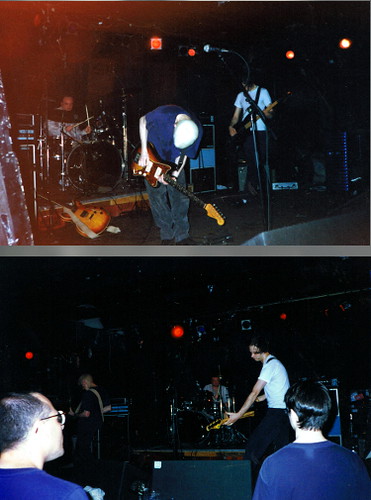
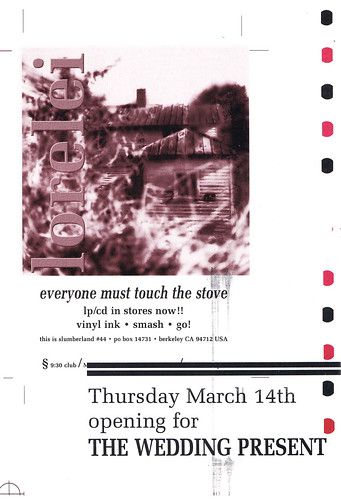 SG: We played several shows that summer and fall of 1995 and into the winter with the release of the LP, for which we had a single record-release show in D.C., being pretty sick of the songs by then since they were all more than a year old. We had written a new batch of songs during the summer of '95, most of which we recorded then but didn't mix until 2001, long after we had disbanded. Our last show was in early 1996 in Baltimore at a strip club that had occasional shows. One of my best Lorelei memories was of Matt taking a running leap, guitar-first, into the stripper'’s pole, with the pole working like a giant slide against the fret board. With me back in school in Massachusetts, everyone with new projects, and us with an LP we felt proud of but that failed to register with nearly anyone, it seemed pretty obvious that the time had come to pack it up. Luckily, the end was not acrimonious and, despite lots of challenges between us, I think we all left the band as friends, feeling like we had accomplished something important and with our respect and admiration for each other intact. This was obviously essential to our later work together.
 CC: One of my favorite music articles is Nitsuh Abebe's Pitchfork piece


